What Happened
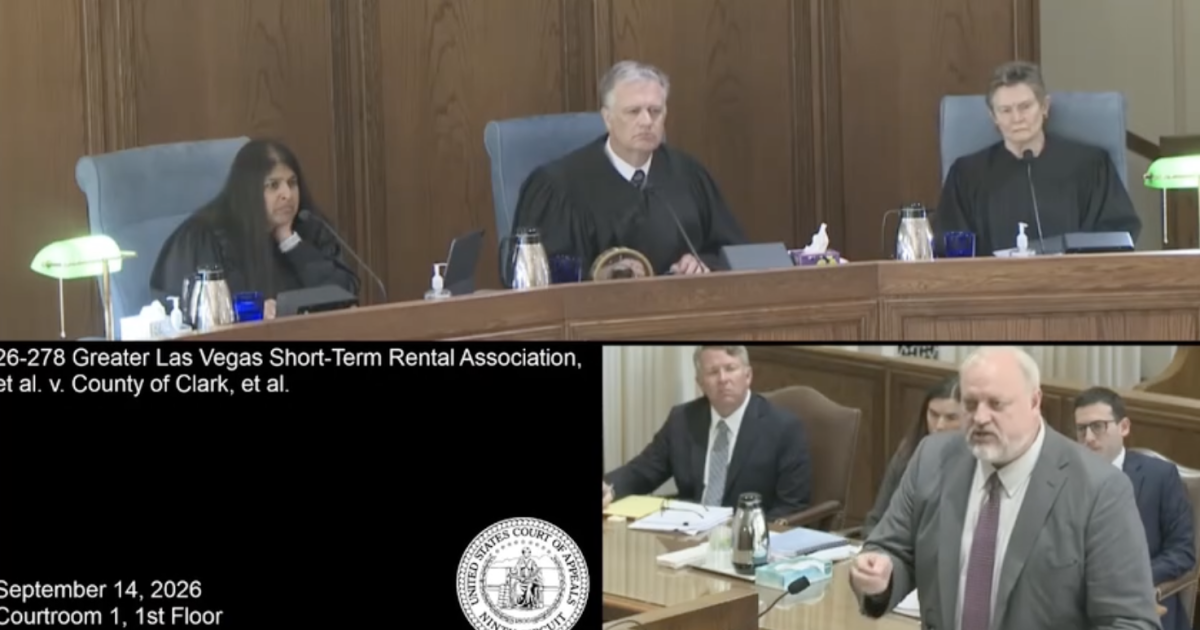
On September 16, 2026, a three-judge panel of the U.S. Court of Appeals heard oral arguments in a high-stakes dispute over Clark County's short-term rental licensing process. The case centers on a December 2025 federal injunction that blocked the county from enforcing its STR license requirements, with a judge finding the county's process "likely illegal."
The Greater Las Vegas Short-Term Rental Association (GLVSTRA) sued Clark County after the county closed its STR license application window in August 2023—nearly three years before the court hearing. During that window, the county processed only 316 applications total: 175 were granted and 141 were denied. When Judge Ryan Nelson pressed the county's attorney, Thomas Dillard, on this progress, Dillard acknowledged the sluggish pace. "Oh, so you made even less progress than I would've thought," Nelson responded.
GLVSTRA attorney David Zionts argued the county failed fundamentally: "There's just been a failure to implement a meaningful process." The county appealed the injunction, but the appellate judges signaled skepticism about the county's ability to manage licensing requirements going forward.
"There's just been a failure to implement a meaningful process." — David Zionts, Greater Las Vegas Short-Term Rental Association attorney
The Financial Impact
While the article does not disclose specific fine amounts imposed on individual hosts, the case reveals systemic costs:
| Cost Category | Impact |
|---|---|
| Application Processing Delays | 3+ years with only 316 applications processed |
| Fines Levied on Homeowners | Mentioned in court as a driver of the lawsuit; amounts not disclosed |
| Legal Fees (County & GLVSTRA) | Full costs unknown; federal appellate litigation is expensive |
| Operational Uncertainty | Hosts unable to legally operate or know licensing status |
| Reputational Damage | County credibility damaged; investor confidence eroded |
The real cost to hosts is incalculable: those denied licenses may have lost months or years of rental income, while those waiting for approval faced legal limbo. Many hosts likely faced fines for operating without current licenses—a direct consequence of the county's failure to process applications.
How LawfulStay Could Have Helped
A search on the LawfulStay database for "Clark County, Nevada" in 2023 would have revealed critical information that could have prevented this crisis:
For hosts: LawfulStay would have shown that Clark County's application window was closed and provided the documented timeline for licensing. Hosts could have understood the legal risk of operating without current approval and planned accordingly—either pausing operations, relocating to compliant jurisdictions, or joining advocacy efforts like GLVSTRA.
For the county: A comprehensive compliance database would have benchmarked Clark County's 316-application processing rate against peer jurisdictions. Best practices from cities like Denver, Austin, and Portland—which maintain open, transparent licensing systems—could have informed county leadership that their process was an outlier and legally vulnerable.
For investors and platforms: Airbnb and other platforms could have used LawfulStay to flag Clark County as a high-risk jurisdiction, alerting hosts to the licensing danger and the litigation trend months or years earlier.
LawfulStay covers 1,080+ jurisdictions globally and tracks licensing changes, closure dates, fee structures, and enforcement trends. This case exemplifies why knowing your jurisdiction's rules—before you list, before you invest, before you face fines—is not optional.
Key Takeaways for Hosts
-
Check Licensing Status First. Before listing on Airbnb, Vrbo, or any platform, verify your local jurisdiction's STR licensing requirements on LawfulStay. Know whether applications are open, what fees apply, and what documentation you need. Clark County hosts who checked the status in 2023 would have discovered the closed window and avoided legal jeopardy.
-
Monitor Regulatory Closure Dates. When a jurisdiction closes its application window, don't assume it will reopen soon. Clark County's August 2023 closure lasted over two years with no public timeline for reopening. Set alerts for your city on LawfulStay to track when windows reopen and deadlines change.
-
Understand Fines and Penalties. Operating without a valid license exposes you to enforcement fines, cease-and-desist orders, and platform deactivation. The court case mentions fines were a key grievance for hosts. Review your jurisdiction's penalty schedule on LawfulStay before you ever go live.
-
Join or Form Host Advocacy Groups. GLVSTRA's lawsuit was effective because hosts united. If your jurisdiction's rules are unfair, unclear, or unenforced, connect with other hosts. Many compliance issues are solved through collective pressure and legal action.
-
Diversify Across Compliant Jurisdictions. If your city's licensing is in limbo, consider listing properties in nearby compliant areas. LawfulStay's multi-jurisdiction database makes it easy to compare rules across neighboring cities and find alternative markets.
The Bigger Picture
Clark County's crisis is not unique. Across North America, municipalities have struggled to balance short-term rental demand with housing availability, neighborhood impacts, and tax collection. Many cities responded by creating licensing schemes—but implementation has been inconsistent. Some jurisdictions, like Denver and Portland, have transparent, well-staffed programs. Others, like Clark County, have created backlogs and legal liability.
The federal court's willingness to enjoin enforcement suggests judges are skeptical of licensing systems that are too restrictive, too slow, or too vague. As cities face more litigation over STR rules, we expect to see a trend toward clearer, faster, and more predictable licensing processes. Jurisdictions that fail to modernize and efficiently process applications will face court challenges—and hosts will bear the cost through fines, deactivation, and lost income.
Stay Compliant
Clark County's three-year licensing freeze and the subsequent federal injunction show why reading the rules—and staying updated—is essential. Whether you're in Las Vegas, Vancouver, Barcelona, or Bangkok, your jurisdiction's STR rules are your legal foundation.
Check your city on LawfulStay today. Our database covers Clark County, Nevada, and 1,080+ other jurisdictions worldwide. Verify your licensing status, understand your obligations, and avoid the costly mistakes that led to this federal lawsuit. Your rental income—and your legal standing—depend on it.