What Happened
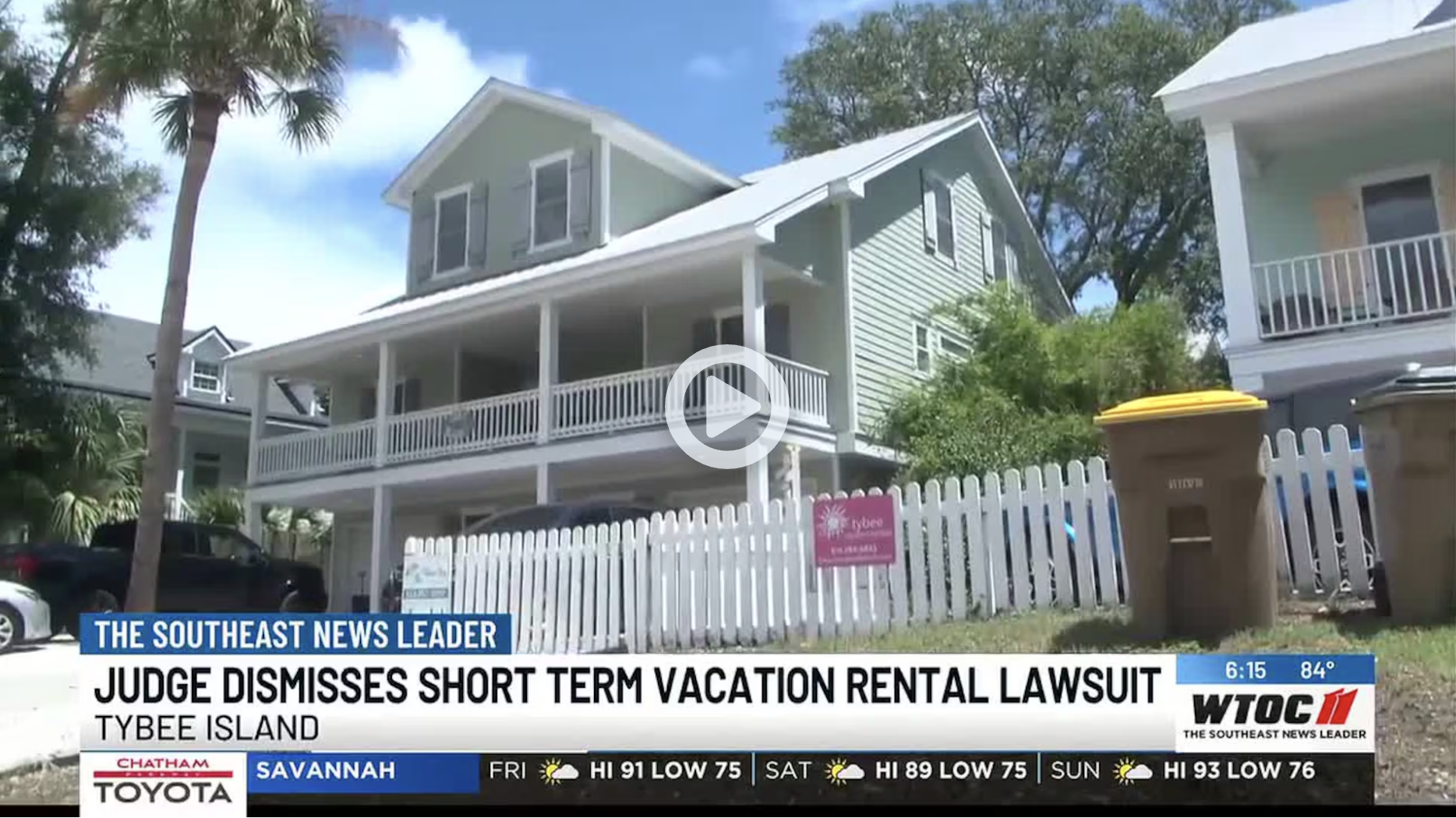
On August 6, 2026, a Chatham County judge dismissed a high-profile civil lawsuit centered on short-term vacation rental (STR) regulations on Tybee Island, Georgia. The case, reported by WTOC and written by journalist Cam McCann, reportedly involved Tybee Island Mayor Brian West and turned on the legality or enforcement of the island's vacation rental rules.
While the court's dismissal ends this particular legal challenge, it does not resolve the underlying tension between the city's regulatory framework and property owners operating short-term rentals on this popular barrier island near Savannah.
A Chatham County judge has dismissed a high-profile civil case on Tybee Island centered on short-term vacation rental regulations. — WTOC, August 6, 2026
Tybee Island has been one of Georgia's most actively regulated STR markets for years. The city has capped the number of vacation rental licenses, imposed strict noise and occupancy rules, and enforced penalties for non-compliant operators — making it a jurisdiction where hosts cannot afford to operate without a thorough understanding of local law.
The Financial Impact
The WTOC report does not detail specific fines or monetary judgments associated with this case. However, the broader cost landscape for non-compliant STR operators on Tybee Island is well established. Hosts who have faced enforcement actions on the island have reportedly encountered a range of financial consequences.
| Potential Cost Category | Estimated Range |
|---|---|
| STR license application & renewal fees | $400–$750/year |
| Fines for operating without a license | $500–$1,000+ per violation |
| Legal fees for civil litigation | $5,000–$50,000+ |
| Back taxes and penalties (if applicable) | Varies significantly |
| Lost rental income during enforcement pause | Thousands per week in peak season |
Even if a lawsuit is ultimately dismissed, the legal costs of participating in — or defending against — STR-related litigation can dwarf the cost of proactive compliance. A dismissal is not a vindication of unlicensed or non-compliant operation; it is a procedural outcome that leaves the regulatory framework intact.
How LawfulStay Could Have Helped
Tybee Island is exactly the type of jurisdiction where a quick check on LawfulStay.com can prevent costly surprises. The city operates under a licensing cap system, meaning the number of legally permitted STR units is finite — and a host who misses the application window or operates outside the rules may face enforcement regardless of how long they've been renting.
A LawfulStay search for Tybee Island, Georgia would surface:
- Current licensing requirements — including whether new licenses are available or if a waitlist applies
- Operational restrictions — occupancy limits, noise ordinances, parking requirements, and required safety inspections
- Penalty structures — what fines apply for operating without a valid license or violating permit conditions
- Recent regulatory changes — any amendments to the city's STR ordinance that could affect existing operators
Had the parties involved in this lawsuit consulted an up-to-date regulatory resource before operating or challenging the city's rules, they would have had a clearer picture of what the law actually requires — and whether litigation was a necessary or advisable path.
With 730+ jurisdictions tracked, LawfulStay is built precisely for markets like Tybee Island, where local rules are specific, actively enforced, and frequently updated.
Key Takeaways for Hosts
-
A dismissed lawsuit does not change the regulations. The dismissal of this civil case leaves Tybee Island's STR ordinance fully in effect. Hosts should not interpret any legal outcome as a green light to operate outside established rules.
-
Litigation is not a compliance strategy. Legal challenges to STR ordinances are expensive, time-consuming, and rarely successful at the municipal level. The far lower-cost path is understanding and following local rules from the start.
-
Licensing caps require early action. In jurisdictions like Tybee Island that limit the total number of STR permits, waiting to apply — or assuming you can obtain a license after you've already begun renting — is a serious operational risk.
-
Mayoral and political involvement signals heightened enforcement. The reported involvement of Tybee Island Mayor Brian West in this case underscores that local leadership is actively engaged in STR oversight. High-profile political attention typically precedes stricter enforcement.
-
Verify your compliance status before each rental season. STR regulations change. A license that was valid last year may have new conditions attached this year. Checking LawfulStay before the start of each season is a simple step that can prevent costly violations.
The Bigger Picture
Tybee Island is not an outlier. Across the United States, coastal and resort communities have been among the most aggressive adopters of STR licensing caps, permit lotteries, and active enforcement programs. From the Outer Banks in North Carolina to the Florida Keys, local governments are using a combination of licensing limits, fines, and litigation to regain control over housing stock and neighborhood character.
The pattern playing out on Tybee Island — regulatory ordinance, legal challenge, court ruling — is one that is repeating itself in dozens of markets simultaneously. In nearly every case, the courts have upheld municipalities' right to regulate short-term rentals as a legitimate exercise of local zoning authority. Hosts who place their bets on litigation overturning these rules are increasingly finding themselves on the losing side, and significantly out of pocket.
Stay Compliant
If you operate a short-term rental on Tybee Island — or anywhere in Chatham County — now is the time to verify your compliance status. Visit LawfulStay.com and search Tybee Island, Georgia to review current licensing requirements, permit caps, operational rules, and enforcement penalties. With regulations actively enforced and legal challenges failing in court, compliance is the only reliable protection for your rental business.