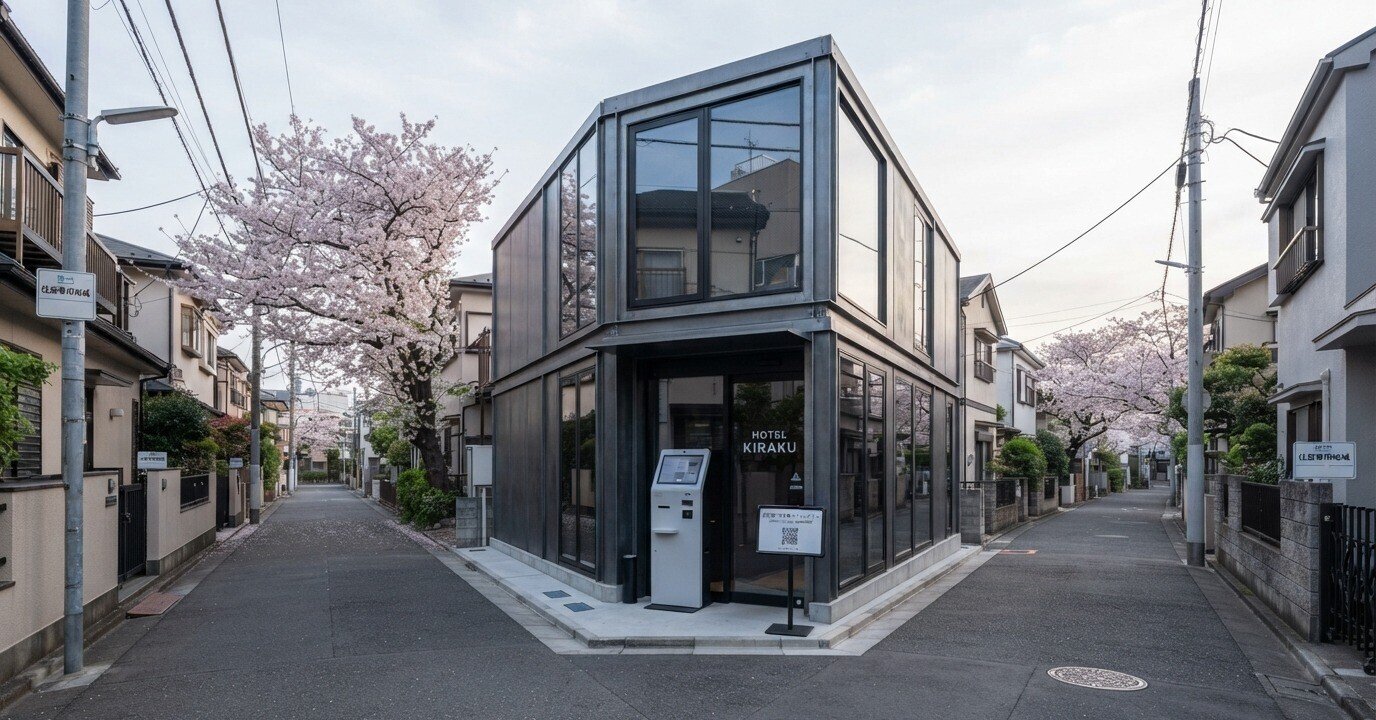
Quick answer: Ota Ward and Setagaya Ward in Tokyo have amended ordinances to ban new minpaku (short-term rental) operations in residential-only zones to protect neighborhood quiet and safety. Existing and new facilities must install security cameras and may face staff residency requirements.
Key Facts
| Fact | Detail |
|---|---|
| Jurisdiction | Ota Ward and Setagaya Ward, Tokyo, Japan |
| What changed | Ordinance amendments banning new minpaku in residential-only zones; mandatory security cameras for guest entry monitoring; staff residency requirements under consideration for hotels and lodging facilities |
| Who it affects | New minpaku operators in residential zones; existing minpaku facilities; hotels and traditional inns (ryokan) expanding unmanned operations |
| Status | Adopted |
| Effective date | Not yet announced |
| Penalties | Not reported |
| Governing body | Ota Ward and Setagaya Ward municipal governments |
What Changed
According to note.com, in Japanese, Ota Ward and Setagaya Ward in Tokyo have moved to strengthen regulations on minpaku (民泊, short-term rentals) to protect residential neighborhoods. The wards are amending their ordinances to "principally prohibit new minpaku business in residential-only zones" (住居専用地域での新規の民泊営業を原則として禁止). Beyond bans on new operations, the wards are requiring "security camera installation obligations" (防犯カメラの設置義務) to monitor guest entry and exit, and these requirements apply to both new facilities and existing operations already in business. The article notes that staff residency requirements are rippling beyond minpaku into the hotel and traditional inn sectors, reversing industry trends toward unmanned and reduced-staff operations.
Who Is Affected
The regulations directly affect operators seeking to start new minpaku businesses in residential-only zones in Ota and Setagaya wards. Existing minpaku facilities already operating in these areas must follow the new security camera installation requirements. The article reports that the regulatory trend is also affecting hotels and ryokan (traditional Japanese inns) that have pursued automation and staffless check-in models, as staff residency or on-site presence requirements are being proposed across the hospitality sector in urban areas.
What Hosts Should Do Now
- Check zoning status for your property in Ota or Setagaya ward to confirm whether it sits in a residential-only zone subject to the new ban on new minpaku operations.
- Review existing obligations if your minpaku is already operating, as security camera installation to monitor guest entry and exit appears mandatory under the new rules.
- Prepare for staff requirements by assessing whether your operation model can accommodate on-site staff or residency obligations that may apply to new facilities.
- Monitor official ward announcements for the effective date and implementation details of the amended ordinances, which have not yet been announced.
- Consult local authorities in your ward for guidance on how existing operations will transition into following the new rules and what timeline applies.
The Bigger Picture
The regulatory tightening reflects resident complaints that minpaku and unmanned hotels have degraded neighborhood quality of life. According to the article, residents in these wards reported that without on-site staff, issues such as noise disturbances and improper waste disposal go unchecked, with "the burden absorbed by people living in the neighborhood" (しわ寄せを受け止めていたのは、いつも「その街で暮らす人たち」). The article frames the shift as a return to the principle that accommodating guests requires both traveler safety and protection of the daily peace of the surrounding community.
The article notes that this regulatory pivot is not limited to minpaku. The hotel and inn sectors, which have pursued cost-cutting through automation and staffless operations, are facing pushback as municipalities impose or propose on-site staff requirements, putting "strong brakes on the trend of unmanned and reduced-staff operations" (無人化・省人化の流れに強いブレーキがかかっています) that had become industry standard.
Frequently Asked Questions
Can I start a new minpaku in a residential zone in Tokyo's Ota or Setagaya ward?
No. Both wards have amended ordinances to principally prohibit new minpaku operations in residential-only zones. If your property is in such a zone, you cannot operate a new short-term rental.
Do I need security cameras for an existing minpaku in Ota or Setagaya ward?
Yes. According to note.com, security camera installation to monitor guest entry and exit is required for both new and existing minpaku facilities in these wards.
When do the new Tokyo minpaku rules take effect?
The article does not announce an effective date. The ordinance amendments are reported as under way (進んでいます) but implementation details have not been announced. Check your ward's official website for the timeline.
Do these rules apply to hotels and inns too?
The minpaku ban and security camera rules apply to short-term rentals. However, staff residency or on-site presence requirements are rippling into the hotel and traditional inn sectors as part of a broader regulatory trend in urban Tokyo.
Sources
- 【第1回】「無人ホテル」という時代の曲がり角。都市部の民泊規制 ..., note.com
Check the current rules for your area in the LawfulStay directory.