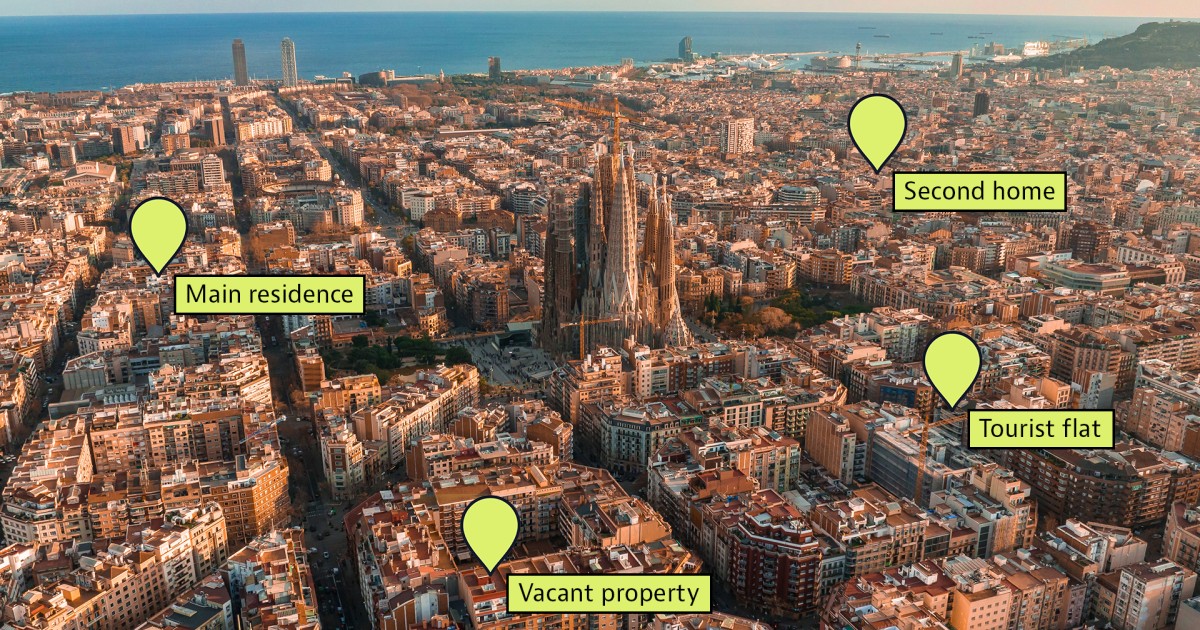
Quick answer: Spain's Royal Decree-Law 29/2026, adopted in October 2026, allows local councils to apply IBI property tax surcharges of up to 150% on tourist rentals in stressed housing market areas, depending on how many properties an owner operates. Barcelona announced it will implement the maximum rates.
Key Facts
| Fact | Detail |
|---|---|
| Jurisdiction | Spain, national; applies to stressed housing market areas designated by local councils |
| What changed | Royal Decree-Law 29/2026 (6 October 2026) permits IBI surcharges on tourist rentals: 50% for one property, up to 100% for two to four properties, up to 150% for four or more properties in stressed areas |
| Who it affects | Owners of tourist rental properties (holiday lets, short-term rentals) in designated stressed housing market areas; also owners of empty homes and second homes |
| Status | Adopted |
| Effective date | 6 October 2026 (adopted); Barcelona announced implementation plans |
| Penalties | Tax surcharges (not fines); 50-150% increases to IBI depending on number of properties owned |
| Governing body | Spanish government; implemented by local councils in stressed housing market areas |
What Changed
Spain's government adopted Royal Decree-Law 29/2026 on 6 October 2026 as part of a wider housing package. According to idealista Spain, the decree changes how local councils can apply tax surcharges to certain properties, including tourist rentals and second homes.
For tourist accommodation in stressed housing market areas, local councils can now apply IBI (Spain's annual council property tax) surcharges based on the number of tourist rental properties an owner holds:
- One property: up to 50% surcharge
- Two to four properties: up to 100% surcharge
- Four or more properties: up to 150% surcharge
The decree also increases IBI on empty residential properties and changes how income tax is calculated on second homes and unused properties from 2027 onwards. Spain has approximately 7.5 million non-primary homes, representing 27.8% of its total housing stock.
Who Is Affected
The tax changes apply to owners of tourist rental properties (short-term rentals, holiday lets) located in officially designated stressed housing market areas. Barcelona has identified around 7,200 properties affected: 6,000 facing the maximum 150% surcharge and 1,200 facing 100% surcharges.
The rules also affect owners of empty properties left vacant for more than two years and owners of multiple residential properties. Owners of second homes or properties not rented out as primary residences face changes to income tax from the 2028 tax return onwards (filed in 2027).
Properties in areas not designated as stressed housing markets face different, generally lower surcharge levels.
What Hosts Should Do Now
-
Check if your property is in a stressed housing area. Contact your local council to confirm whether your municipality has been designated as a stressed housing market area, as surcharges apply only in these zones.
-
Count your tourist rental properties. Determine how many tourist rental licences or properties you own, as surcharge rates depend on portfolio size (one property, two to four, or four or more).
-
Review your current IBI bills and projections. Calculate the potential impact of surcharges on your annual property tax. Barcelona owners should expect implementation of the announced rates.
-
Understand income tax changes for 2027 and beyond. From 1 January 2027, a progressive income tax scale replaces the flat 1.1% rate for second homes and non-primary properties, effective from the 2028 tax return.
-
Consult a tax advisor. Given the complexity of the new rules and variations by location, seek professional guidance on your specific tax obligations and planning options.
The Bigger Picture
According to idealista Spain, Spain's government introduced these measures as part of a controversial parliamentary vote on housing reforms. The government aims to encourage owners to bring empty homes onto the market and reduce the number of tourist rentals, particularly in areas facing housing shortages.
The tax changes reflect wider housing policy shifts, also including measures on evictions and restrictions on property purchases by investment funds and large-scale landlords. Barcelona's announcement to implement the maximum surcharges signals that major cities view the new rules as a tool to reduce short-term rental supply in favour of long-term residential housing.
Frequently Asked Questions
Do I need to pay higher taxes on my tourist rental in Spain?
Only if your property is in a stressed housing market area designated by your local council. In these areas, IBI surcharges apply based on how many tourist rental properties you own: up to 50% for one, up to 100% for two to four, and up to 150% for four or more. Check with your council to see if your area qualifies.
What is the maximum IBI surcharge for tourist rentals in Spain under Royal Decree 29/2026?
In stressed housing market areas, the maximum IBI surcharge is 150% for owners with four or more tourist rental properties. Barcelona has announced it will apply this maximum rate to about 6,000 holiday let properties. Outside stressed areas, different rules apply.
When do the new tourist rental tax rules take effect in Spain?
Royal Decree-Law 29/2026 was adopted on 6 October 2026. Barcelona announced implementation plans immediately, though the exact date councils must apply the surcharges was not specified in this article.
How many properties in Spain will be affected by the new tax surcharges?
Spain has approximately 7.5 million non-primary homes, though not all are tourist rentals. Tax surcharges apply only to tourist rentals in stressed housing areas and empty or second homes meeting other criteria. Barcelona identified around 7,200 tourist rental properties affected.
Will my income tax on a second home in Spain increase from 2027?
Yes, from 1 January 2027, the flat 1.1% income tax rate on second homes and unused properties will be replaced by a progressive scale based on the combined cadastral value of all your non-primary properties. This affects the 2028 tax return filed in 2027.
Sources
- More than 7.5 million homes in Spain could face higher property taxes, idealista Spain
- Official source
Check the current rules for your area in the LawfulStay directory.